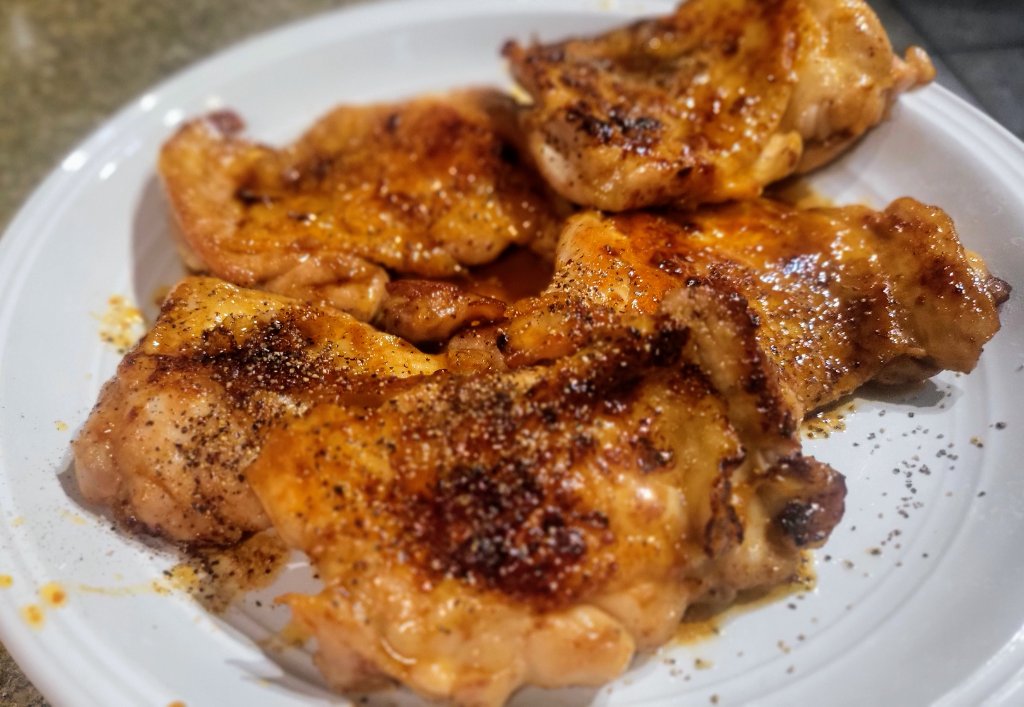
Operation: Shattered Glass
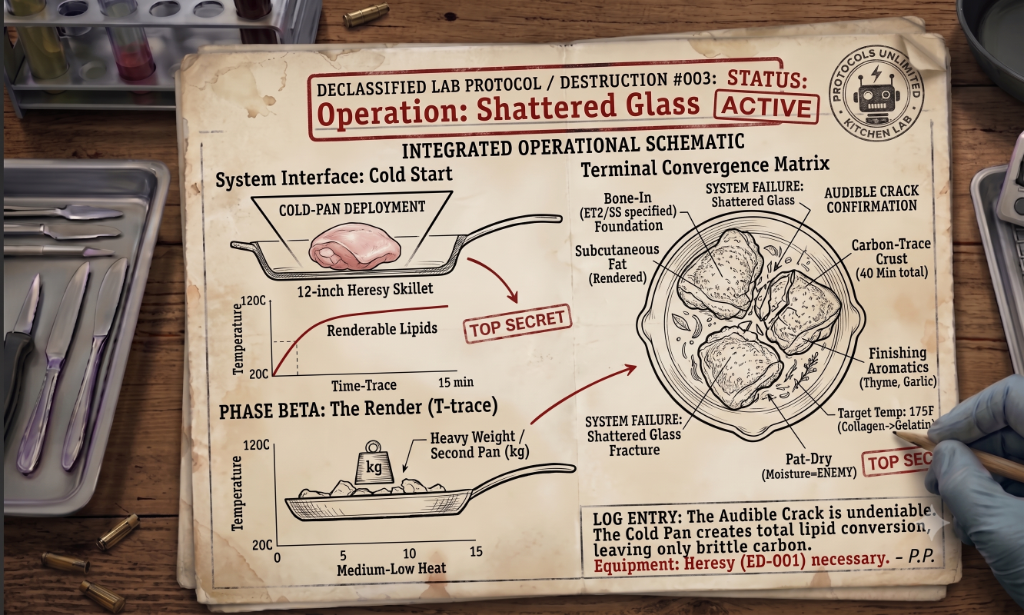
Every recipe for chicken skin tells you to preheat the pan. This protocol does not. The pan starts cold. There is no oil. A weight is placed on top. The subcutaneous fat beneath the skin renders out completely over 15 minutes at medium-low heat — before any browning begins. What remains when it finally makes contact with a hot surface shatters when the knife comes down.
That sound is the confirmation the protocol worked.
This is a technique protocol, not a dish protocol. The cold-pan method applies to every skin-on cut. Duck legs. Pork belly. Salmon skin. The mechanism is identical. The sequence is identical. The result is the same audible crack on first cut.
| ASSET | QTY |
|---|---|
| Skin-on, bone-in chicken thighs | 4 units |
| Kosher salt | To season |
| Black pepper | To season |
| Cast iron pan | 1 unit |
| Heavy weight or second pan | 1 unit |
| Finishing aromatics | Optional |
- 01
Pat chicken thighs completely dry with paper towels. Both sides. Moisture on the skin creates steam — steam is the enemy of crust.
- 02
Season skin side with kosher salt and cracked black pepper. Do not oil the pan. Do not oil the chicken.
- 03
Place chicken skin-side DOWN in a cold cast iron pan. Do not preheat. Cold pan, cold chicken.
- 01
Place a heavy weight on top of the chicken — a second pan, a foil-wrapped brick, or a press.
- 02
Turn heat to medium-low. Start the timer.
- 03
Do not touch it. Do not move it. Do not adjust. The fat is rendering slowly beneath the skin. This takes 12–15 minutes.
- 04
At the 12-minute mark, check by lifting one thigh gently at the edge. The skin should be pale, flat, and releasing from the surface. You will hear the sizzle change from wet to dry — that is the water cooking off, indicating the fat is nearly rendered.
- 01
Remove the weight. Increase heat to medium-high.
- 02
Without moving the chicken, let it brown for 3–4 more minutes until the skin is deep golden and releases from the pan cleanly.
- 03
Flip. The flesh side takes 6–8 minutes at medium until internal temperature reaches 175°F. Not 165°F. 175°F is where the collagen converts to gelatin and the meat pulls from the bone cleanly.
- 01
Remove from heat. Rest 5 minutes uncovered on a rack — not a plate. A plate traps steam beneath the skin.
- 02
Cut down through the skin with a sharp knife. Listen for the crack. If the crack is audible, the protocol executed correctly.
High heat browns the skin surface before the fat beneath it renders. You get a crust on top of a soft fat deposit — which is why home-cooked chicken skin gives when pressed instead of shattering. Reversing the sequence — render first, brown second — eliminates the fat entirely. This technique applies to every skin-on cut you will ever cook.
Field Rating: Confirmed — audible crack on first cut.
Sensory analysis: Clean aftertaste, no greasy coating. Fat fully rendered. Collagen conversion confirmed at 175°F internal. Protocol cleared for public release.
| ✓ | Asset | Base (4) | Scaled Qty | Role |
|---|---|---|---|---|
| Skin-on, bone-in chicken thighs | 4 units | 4 units | Primary protein — bone-in preferred | |
| Kosher salt | 1 tsp | 1 tsp | Surface seasoning | |
| Black pepper (cracked) | ½ tsp | ½ tsp | Surface seasoning |
THIS IS ONE PROTOCOL. THE ARCHIVE CONTAINS THE REST.
Every finding documented in this protocol is transferable. The mechanism applies beyond this dish — to everything you cook that shares the same underlying structure.
The full archive is $14.99 a month. Every protocol. Every finding. Every new release.
Or purchase Protocol Pack 01 — first 30 protocols, permanent access — for $59.97 one-time.
$14.99/month — Complete archive — New releases included — Cancel any time